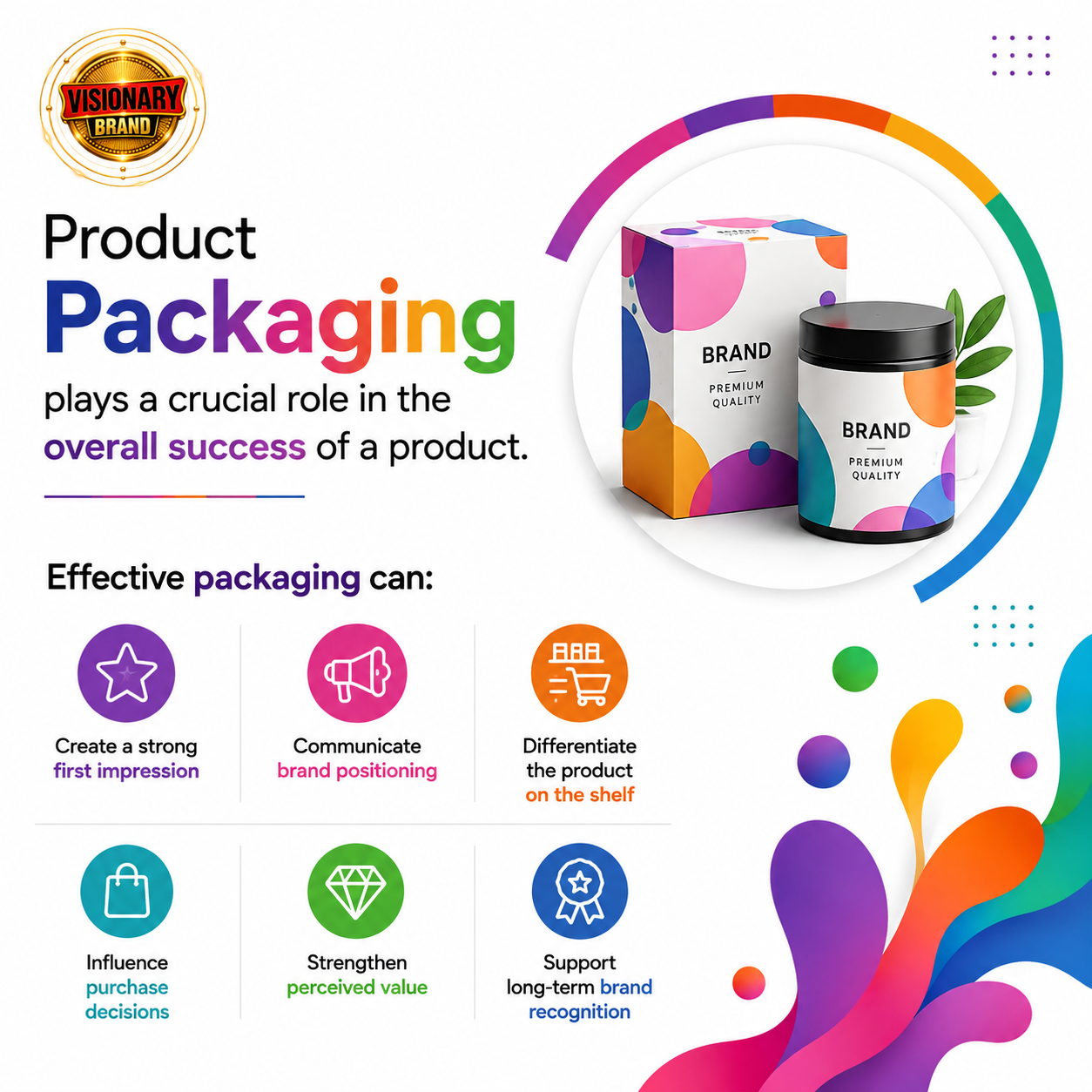
Product packaging plays a crucial role in the overall success of a product

Packaging is protection, communication, differentiation and one of the most powerful brand touch points a consumer experiences before making a purchase. In a crowded…
Packaging is protection, communication, differentiation and one of the most powerful brand touch points a consumer experiences before making a purchase.
In a crowded marketplace, your packaging has only a few seconds to capture attention and communicate value. A well-designed package can protect the product, explain its benefits, influence purchase decisions and create a lasting impression of the brand.
Your product may be inside the package. Your brand is on it.
Why Product Packaging Matters
1. Protect the Product. Protect the Promise.
The primary purpose of packaging is protection, but its role goes far beyond preventing physical damage.
Packaging must keep products secure throughout manufacturing, transportation, storage and retail display. It should help protect against damage, contamination, tampering and environmental factors while maintaining the product's quality and integrity.
Effective packaging can include:
Durable materials
Secure closures
Tamper evident features
Protective inner structures
Appropriate barriers against moisture, light or air
Packaging designed for safe transportation and storage
A damaged package can damage more than the product—it can damage confidence.
When consumers open a package and find the product secure and intact, the packaging has already delivered its first brand promise: reliability.
2. Packaging Communicates Before Your Brand Speaks
Consumers often interact with packaging before they interact with your website, advertising or sales team.
Packaging communicates:
What the product is
Who it is for
How it should be used
What makes it different
What the brand stands for
What the consumer can expect
For food, beverages, cosmetics, healthcare products and other consumer categories, packaging can also provide essential information such as ingredients, nutritional information, usage instructions, warnings and product benefits.
Good packaging answers questions before customers have to ask them.
3. Packaging Has the Power to Stop the Scroll and Stop the Shopper
Attention is the new shelf space.
Whether your product is displayed in a supermarket, pharmacy, department store, e-commerce marketplace or social media advertisement, consumers are surrounded by competing choices.
Your packaging needs to create an immediate visual connection.
Elements such as:
Colour
Typography
Photography
Illustrations
Shape
Materials
Texture
Finishing
Brand identity
can influence whether consumers notice your product or move on.
The first job of packaging is to get noticed. The second is to get understood. The third is to get remembered.
4. Differentiate or Disappear
Walk through any retail aisle and you will see dozens of products competing for attention.
Similar categories often use similar formats, colours and messaging. This makes differentiation increasingly important.
Distinctive packaging can help a brand establish a recognisable presence through:
Unique structural design
Memorable colour systems
Distinctive typography
Innovative materials
Clear product hierarchy
Interactive or functional elements
Strong visual storytelling
If your packaging looks like everyone else's, your product risks becoming everyone else's choice.
Packaging should not simply follow category conventions. It should understand them—and then identify where the brand can create meaningful distinction.
The Sustainability Shift
Sustainability has become an increasingly important consideration in packaging decisions. Consumers are paying greater attention to the materials used, how packaging is produced and what happens to it after use.
Brands are therefore exploring solutions such as:
Recyclable materials
Recycled content
Renewable materials
Lightweight packaging
Reusable formats
Compostable or biodegradable alternatives where appropriate
Reduced material usage
More efficient packaging design
Brands need to communicate sustainability claims clearly and responsibly, ensuring they are supported by appropriate evidence.
Consumer Demand Is Changing
Consumers increasingly expect brands to consider environmental impact alongside product quality, price and convenience.
Sustainable packaging can help brands:
Strengthen environmental positioning
Appeal to sustainability-conscious consumers
Reduce unnecessary material usage
Support broader sustainability goals
Differentiate within competitive categories
Build stronger long-term brand associations
However, sustainable packaging also presents practical challenges.
Material availability, cost, supply chain requirements, product protection, shelf life, manufacturing capabilities, and recycling infrastructure must all be considered.
Packaging Is Part of the Brand Experience
A customer doesn't experience a brand only through advertisements or social media.
They experience it when:
They see it → Pick it up → Read it → Purchase it → Open it → Use it → Store it → Recommend it.
Packaging participates in every one of those moments.
A premium package can reinforce premium positioning. A simple and transparent design can communicate accessibility. Sustainable materials can reinforce environmental commitments. Functional innovation can demonstrate that a brand understands its customers.
Packaging is therefore not merely a production decision. It is a brand decision.
From Shelf Appeal to Brand Loyalty
A successful package performs several jobs simultaneously:
Protect → Inform → Attract → Differentiate → Reinforce → Remember
When these elements work together, packaging becomes a strategic brand asset rather than simply a container.
The strongest packaging creates an experience that continues after the purchase.
A product gets you into the customer's hands. A great package helps keep you in their mind.
Final Thoughts
In today's competitive marketplace, product packaging has become a powerful combination of function, communication, design, differentiation and responsibility.
Brands that treat packaging as an afterthought may miss an important opportunity to influence perception. Brands that treat packaging as part of their overall brand strategy can create stronger connections at one of the most critical moments in the customer journey.
Your packaging carries your product. But it also carries your promise.
Protect the product. Communicate the value. Create the difference. Build the brand.
For more information contact:
Call Now : 8169773708
Visit us at :Contact · Visionary Brand
Make credibility visible.
Apply for verification